
The Rush for Oil and Gas in Guyana and Suriname
Location:
Offshore Guyana and SurinameProject risks:
Environmental Destruction, Litigation, Social HarmCompanies:
- Exxon Mobil Corporation
- China National Offshore Oil Corporation
- CNOOC Ltd
- Hess Corporation
- TotalEnergies SE
- Frontera Energy Corporation
- Ratio Petroleum Energy LP
- Eco (Atlantic) Oil & Gas Ltd
- Cataleya Energy Corporation
- Chevron Corporation
- APA Corporation
- China National Petroleum Corporation (CNPC)
- PetroChina Company Ltd
- Petroliam Nasional Bhd (PETRONAS)
- Shell plc
- Staatsolie Maatschappij Suriname NV
- Capricorn Energy PLC
- Challenger Energy Group PLC
- Mubadala Investment Company PJSC
approximate location
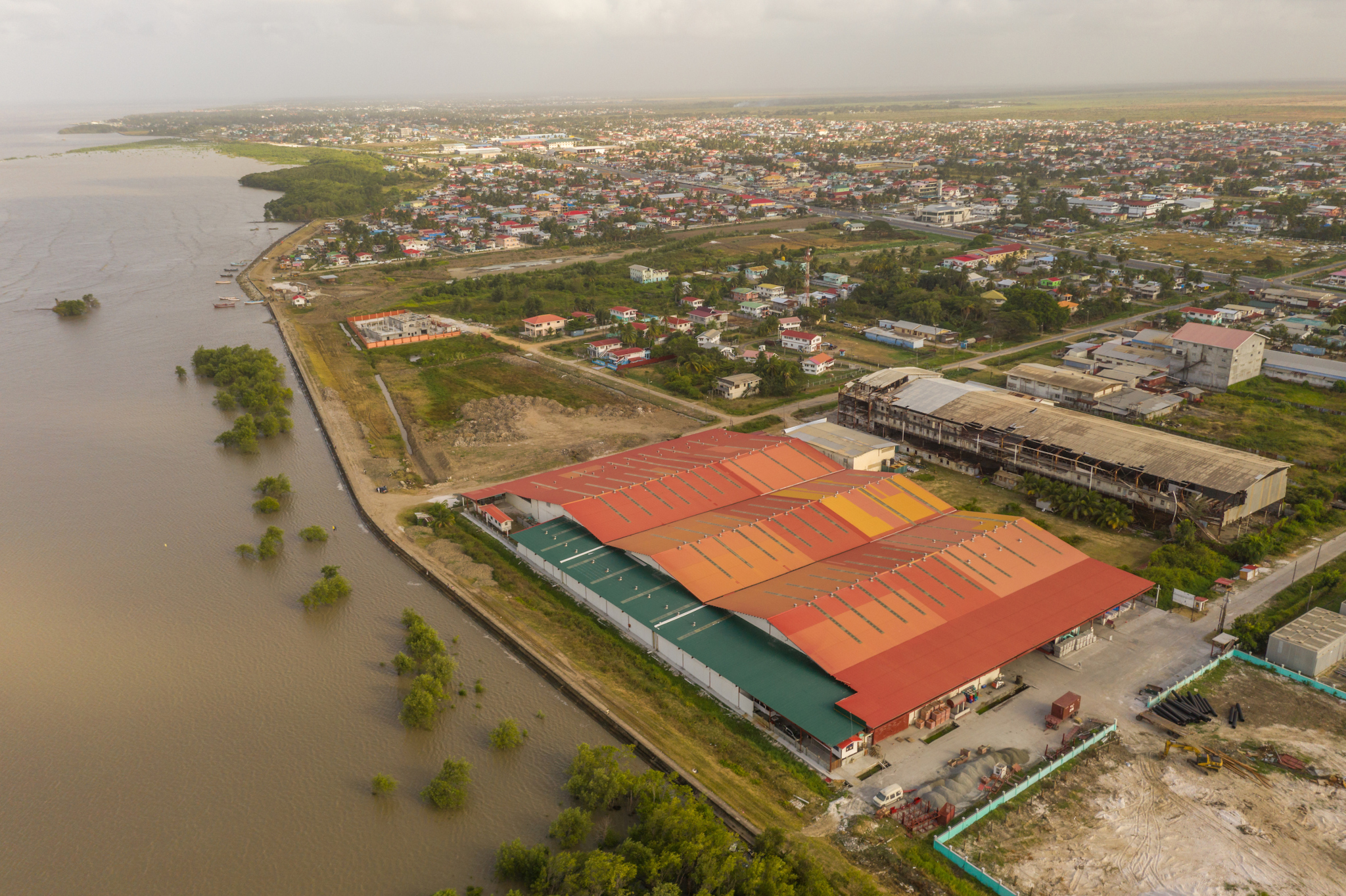
Located on South America’s northern coast, Suriname and Guyana are two of the continent’s smallest, poorest, and most low-lying countries. Around 90% of the population in both countries lives on a narrow coastal plain that is – at its lowest elevation – 2 meters below sea level and acutely vulnerable to floods and rising sea levels.2521225213 Although they are among the countries most threatened by climate change, Guyana and Suriname loom large in the expansion plans of international oil and gas companies.
Note: Information on related companies and risk categories of reputational risk projects on GOGEL is updated annually in September. The text in this article was last updated in March 2026.
Paradise Under Threat
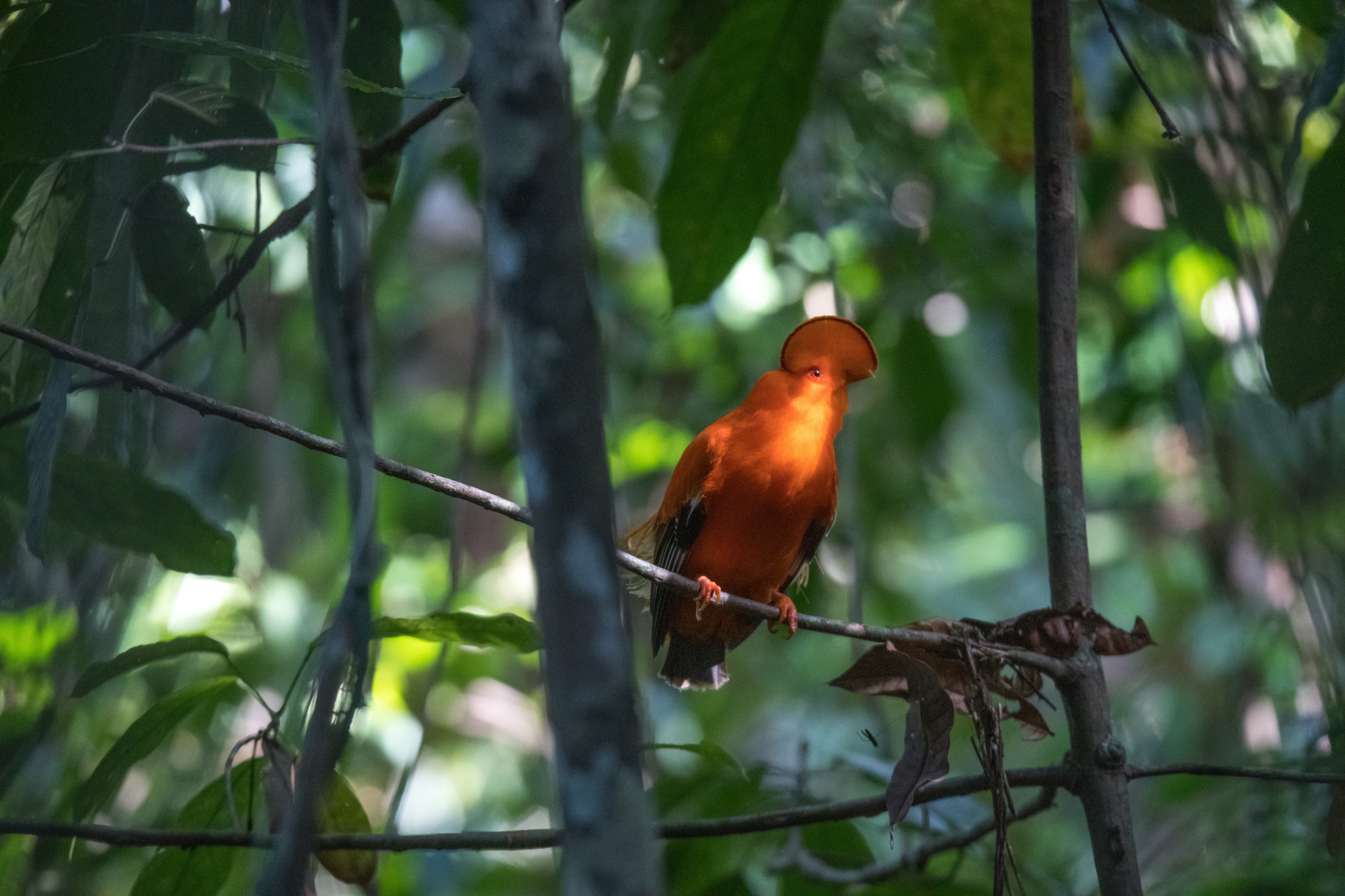
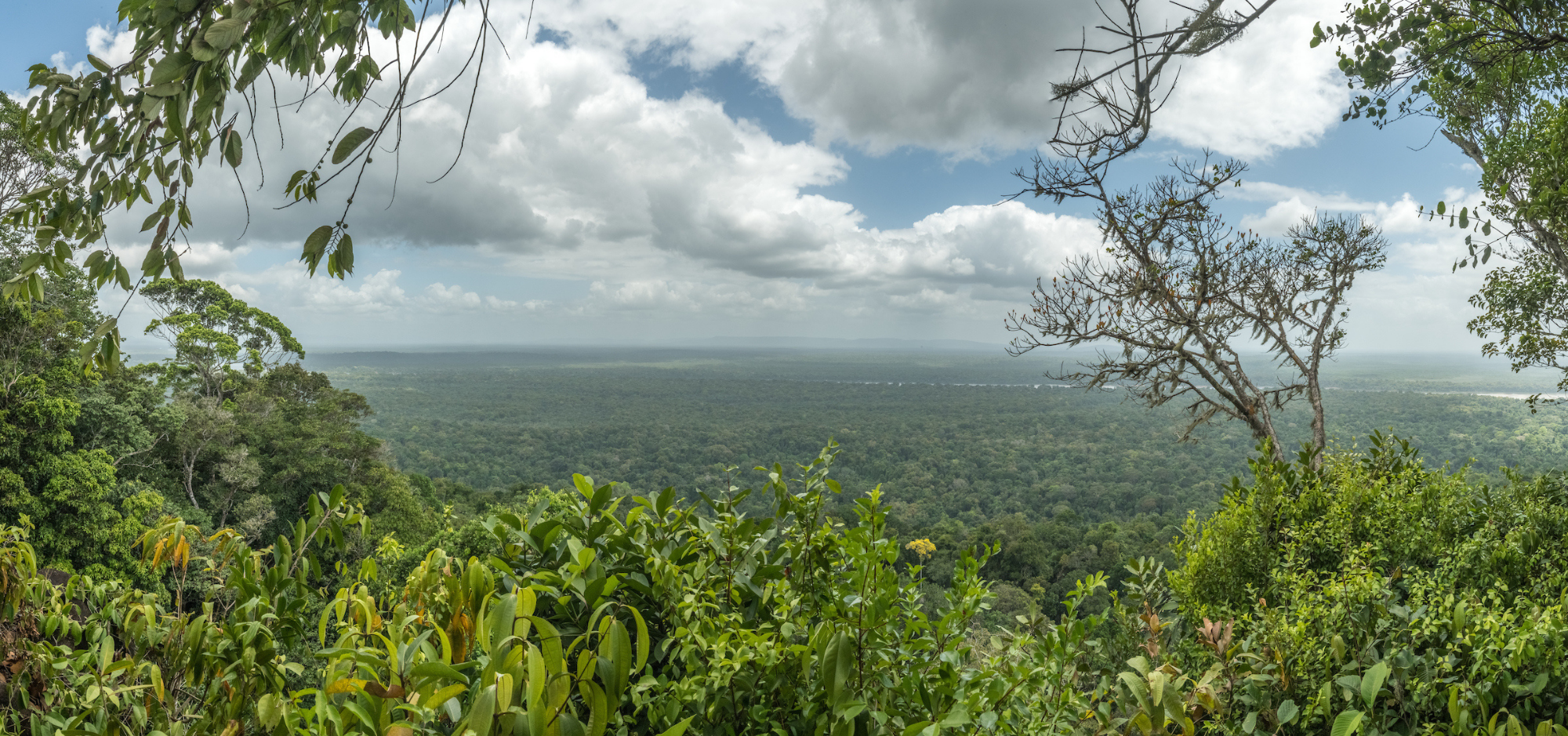
Every year, visitors from near and afar come to see Guyana's rare birds like the Harpy Eagle, the Capuchin bird and the bright orange Cock-of-the-Rock.[5][6][7] Guyana still has one of the largest unspoiled rainforests in South America.[8] The tropical forests are home to jaguars, pumas, giant otters, giant armadillos and capuchin monkeys.[9][10][11] Guyana's abundant wind, water and sun are the perfect basis to develop renewable energies.[12]
Tropical rainforest covers almost 80% of the country.[14] Further south lie the Rupununi savannah lands.[15] In the north, there is Shell Beach, the only officially protected area along the country’s coast.[16] This is where rare sea turtles such as the Leatherback, Olive Ripley, Hawksbill and Green Turtle lay their eggs and hatch their young.[17]19229
Moving in on Guyana
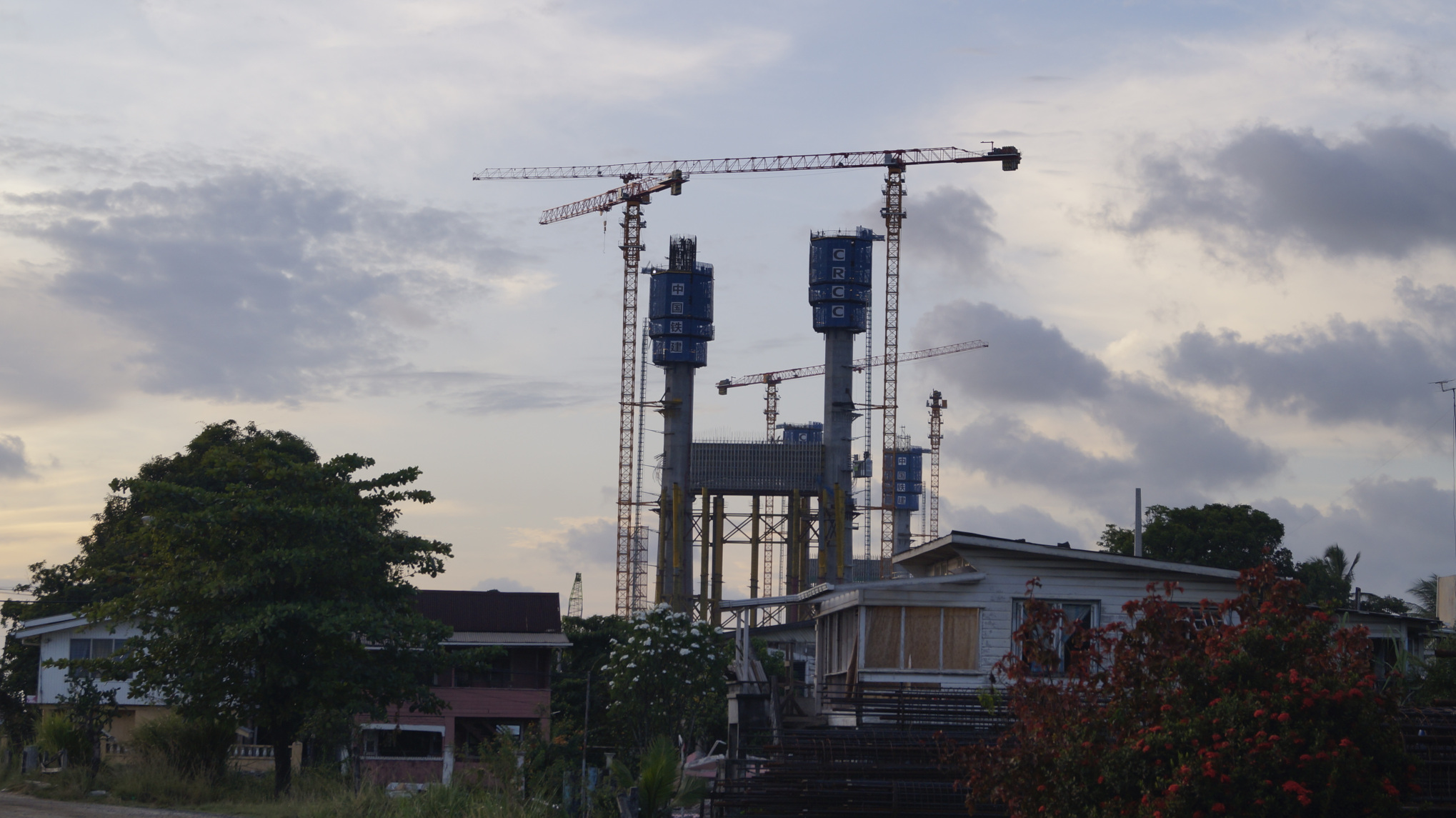
Until 2019, Guyana had never exported a single barrel of oil. By end of 2025, it had become the world’s largest per capita oil producer.25214 This transformation was set in motion by ExxonMobil’s 2015 discovery of a huge oil deposit in the Stabroek Block, 190 km off Guyana’s coast. In the first 10 years following the discovery, ExxonMobil made 34 discoveries in this block, which stretches over 26,800 km² and contains an estimated 11 billion barrels of oil. By 2025, Exxon and its partners were extracting more than 900,000 barrels of oil per day from Stabroek.25215 Massive floating production, storage, and offloading (FPSO) vessels are anchored here to pull the oil from extreme ocean depths. On the heels of ExxonMobil’s discoveries, oil companies from Qatar, Spain, France, the US, and Canada rushed to secure exploration blocks in Guyana’s waters.
Breaching Guyana's Strict Environmental Standards
ExxonMobil and its partners are better at finding oil than at meeting Guyana’s environmental standards. The Environmental Impact Assessments for ExxonMobil’s oil projects have been flawed and possibly did not meet Guyanese legal requirements.1238112383 For its first project, Liza 1, ExxonMobil has been accused of failing to spend the necessary time and money to engage marine scientists to map the plants and animals that live and migrate along the South Caribbean coast.[26]
Exxon’s Gains, Guyana’s Losses
ExxonMobil has amassed extraordinary influence over the Guyanese government. A case in point is the production-sharing agreement Guyana’s government signed with ExxonMobil and its consortium partners in 2016. When the contract was finally released in 2017, after considerable public pressure, it revealed that the government had agreed to pay the corporate and income taxes owed by the oil companies under Guyanese law. According to an appraisal by the Institute for Energy Economics and Financial Analysis (IEEFA), the entire contract is remarkably one-sided.25216 It allows ExxonMobil and its partners to claim up to 75% of oil revenues to cover their development and operating costs. The remaining 25% – the so-called “profit oil” – is split evenly, leaving Guyana with just 12.5% revenue share. In addition, the oil companies pay a token 2% royalty on sales – a rate that is far below international standards.25217 The deal also guarantees ExxonMobil and its partners compensation if the government takes actions that impair their profits. As Guyana’s leading independent daily, Kaieteur News, put it: "Armed with little to no knowledge on the sector, the country settled for what is today described as the world’s worst oil contract."25218
Deadly Seismic Exploration
Searching for oil and gas in the deep waters off the shore of Guyana and Suriname comes with devastating effects for marine life.19229 The geophysical surveys to understand the location and the extent of oil and gas deposits include methods that strongly impact marine species. The Center for Biological Diversity describes the effects of seismic surveys: “Offshore oil and gas exploration uses deafening seismic surveys that generate the loudest humanmade sounds in the ocean, short of those made by explosives. Seismic testing involves blasting the seafloor with high-powered air every 10 seconds and measuring the echoes with long tubes to map offshore oil and gas reserves. These blasts disturb, injure and kill marine wildlife around the clock for years on end.”[27] The threats to fish, sperm whales and other marine mammals in the open sea, to crabs and smaller sea animals in the shallow coastal waters and to birds and fish that breed in the mangroves will grow as oil exploitation continues.
Big Oil Comes To Suriname
Suriname has the highest forest cover of any country in the world. More than 90% of the country is covered in tropical forest.25219 It is one of the very few countries in the world that absorbs more carbon than it emits. For the past 4 decades, Suriname only produced small amounts of oil from 3 onshore fields operated by its state-owned oil company Staatsolie. But since the prolific offshore discoveries in the Guyana portion of the Guyana-Suriname basin, big oil companies have also rushed to explore Suriname’s waters. By 2025, around half of Suriname’s sea areas had already been licensed to international companies. Suriname’s offshore oil and gas reserves are estimated at 2.4 billion barrels of oil equivalent.25220
The first companies moving toward production are TotalEnergies and APA Corporation, joint venture partners operating in Block 58, just across the border from Guyana’s Stabroek Block. In 2024, the companies announced a final investment decision of US $10.5 billion for the development of the GranMorgu oil field in Block 58. The name GranMorgu means “New Dawn” or “Goliath Grouper” in Sranan Tongo, the local creole language. The project will produce 220,000 barrels of oil per day and is expected to come online in 2028.25221 Like Guyana, Suriname is betting big on its oil reserves. The country’s economy has struggled since gaining independence in 1975. After defaulting on its foreign debts in 2020 during the height of the coronavirus pandemic, Suriname was forced to seek financial assistance from the IMF and renegotiate with its creditors. Before the country had even signed an agreement with international oil companies, Suriname’s government was forced to commit 30% of its future annual revenues from Block 58 towards repaying private bondholders.25222 Observers suspect that delays by TotalEnergies and APA in confirming their project on Block 58 were an attempt to strongarm Suriname into more favorable contractual conditions.25223 The Surinamese environmentalist Erlan Sleur worries that the contract with TotalEnergies and APA Corporation may have clauses ensuring "that the oil companies can walk freely in the event of a disaster."25224 The details of the “new dawn” remain in the dark as the government has been reluctant to release the full contract and Suriname lacks a Freedom of Information law.
Guyana’s Citizens vs ExxonMobil
In Guyana, people are increasingly opposed to the oil expansion off their coast. Court cases against the human and environmental consequences of the oil projects in Guyana have kept coming ever since the oil companies first arrived. In May 2021, a scientist and an indigenous Wapichan youth from the Rupununi region in southern Guyana filed the first ever climate change-related constitutional case in the Caribbean.25225 The case challenges more than 4 billion tons of potential greenhouse gas emissions. That is more than any other climate court case.19229 They argue that the entire oil project violates their right to a healthy environment.19229
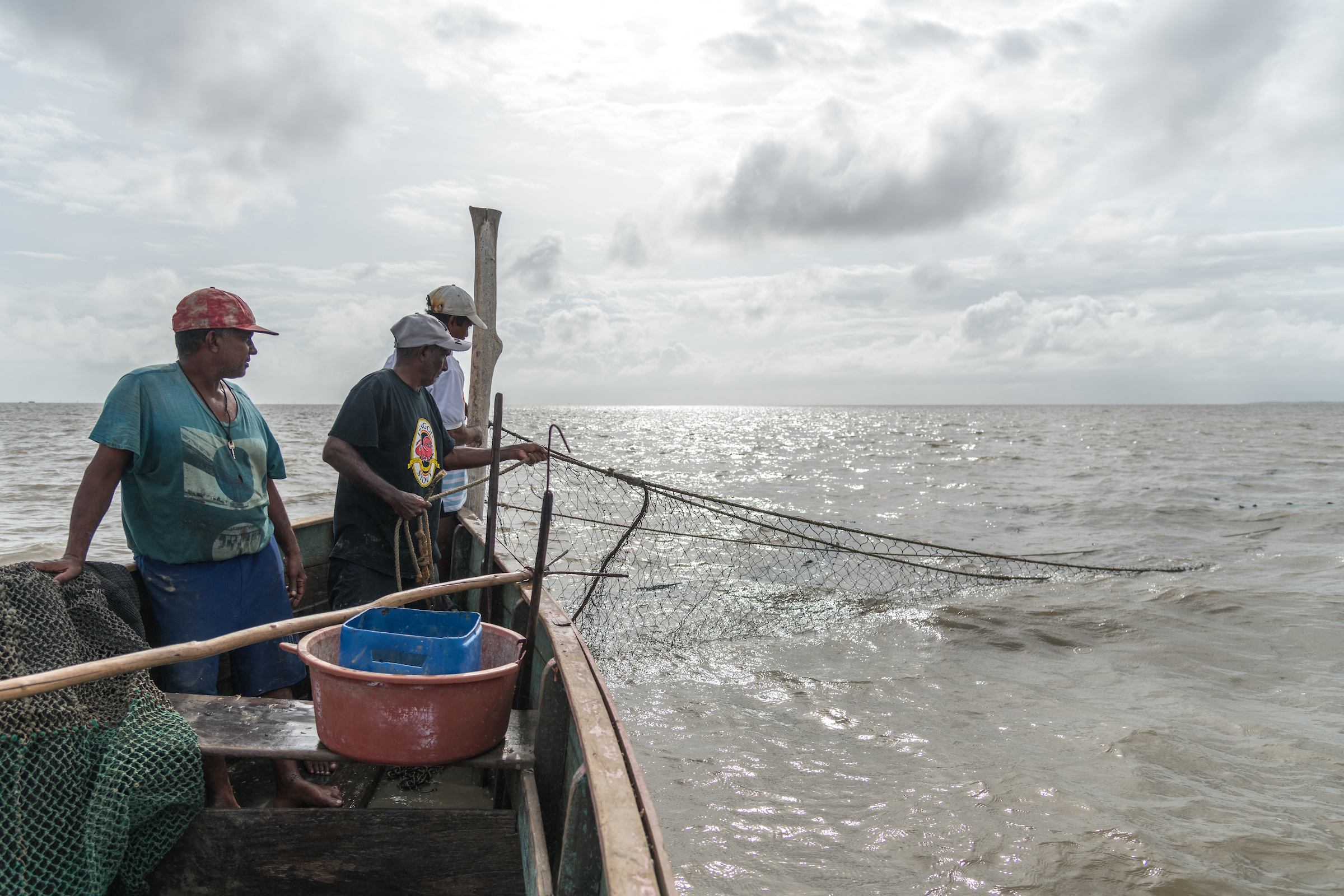
Besides fueling climate change, offshore drilling always carries the risk of catastrophic oil spills, especially when it takes place in ultra deepwater like ExxonMobil’s operations in Guyana. ExxonMobil’s own environmental impact assessment acknowledges that a major spill could reach the coastline of Guyana, Venezuela, and the beaches of 14 Caribbean islands,25226 jeopardizing their tourism and fishing industries. To cover the costs of a potential spill, the Environmental Protection Agency (EPA) permits require an independent liability insurance from ExxonMobil’s subsidiary Esso as well as an unlimited financial guarantee from ExxonMobil itself. These requirements were, however, not enforced, leaving Guyana exposed to astronomical costs in the event of a major oil accident.25227
Concerned about the government’s ability and willingness to defend Guyana’s interests against the world’s biggest private oil company, two Guyanese citizens, Frederick Collins and Godfrey Whyte, turned to the courts. On May 3rd 2023, Guyana’s High Court under Justice Sandil Kissoon ruled that ExxonMobil’s Guyana subsidiary had operated in violation of its permit by failing to provide independent liability insurance and an unlimited financial guarantee from its parent.25228 Guyana’s leading environmental lawyer, Melinda Janki, who represented Collins and Whyte, notes: “Two ordinary citizens in this little country, which most people can’t find on a map, have gone to court and they’ve beaten the EPA, but they’ve also beaten ExxonMobil, and this is really a victory for the people, by the people.”25229 But Janki’s and her clients’ fight is far from over. ExxonMobil and Guyana’s EPA are working to undo Justice Kissoon’s ruling, and still new legal battles are sure to be on the horizon.
Groups working in Guyana: A Fair Deal for Guyana - A Fair Deal for the Planet (Guyanese grassroots people’s movement), Justice Institute Guyana, Organisation for the Victory of the People, Transparency Institute Guyana Inc.
Additional resources:
https://www.youtube.com/watch?v=IwQZ_Qp8Vao
Further reading:
https://www.cijn.org/can-guyana-avoid-the-oil-curse/
https://melindajanki.wordpress.com/oil-gas-2/
Sources: